LEO D. BRADLEY |
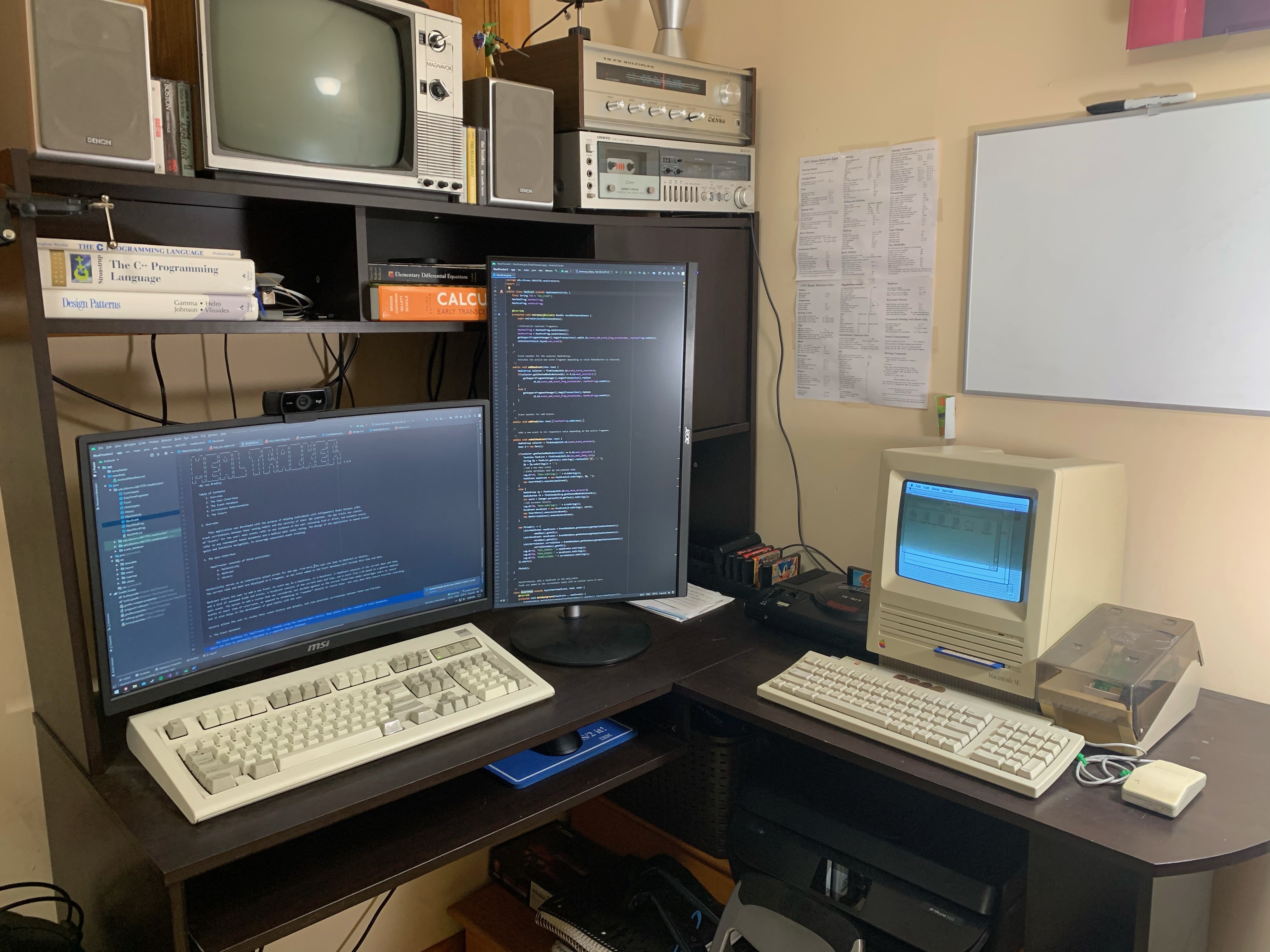
Software Developer - Musician - Vintage Electronics Enthusiast |
| Contact Info |
| Phone: 570-415-6227 |
| Email: [email protected] |
| LinkedIn: Leo Bradley - Software Developer |
Here I have several projects from my past that I'm somewhat proud of.
I've always considered code to be an art. Like any sort of visual material there are many aspects
of code that can be appreciated in some artistic way:
the style and structure of source code, perhaps, or the efficiency of a piece of code
in completing some task. I take great pleasure in writing intuitive source code. I may
write a routine that runs at near peak efficiency, but that code may still not be perfect.
If a colleague can sit down with that code and understand it within some reasonable amount of
time, only then am I truly satisfied with it.
I hope you are able to see these aspects portrayed within the code examples listed below.
KewlShell is a shell I wrote in the C language for a school project. To view the files involved with the project, select "show files" in the embedded Replit window. To run KewlShell, type "./kewlshell" in the Replit console. I've left debugging features enabled, just to help demonstrate how the shell operates.
ThreadPool2 is a personal favorite project of mine. It demonstrates some practical Java networking design patterns, and
it also serves as a good example of clean, intuitive code. ThreadPool2 also demonstrates the four basic principals of
Object-Oriented code. Its use of the Runnable interface demonstrates abstraction and inheritance. Encapsulation is
demonstrated through the use of appropriate access specifiers. Polymorphism is not explicitly demonstrated in this
example, but cheers to it anyways. ThreadPool2 also deals with multi-threading concurrency issues through the use of
Locks and Conditions.
ThreadPool2 and its classes can be viewed by selecting "show files" in the embedded Replit window.
This program models the efficiency of various CPU scheduling algorithms. The project is memorable for me not only due to
its relationship to OS level programming problems, but also due to its relevance beyond computing. Scheduling algorithms
like the ones modeled here are used in the physical world in all sorts of applications, and I enjoy recognizing them and
critiquing them in my day to day life. The code itself is a great example of the uses of data structures such as queues and lists.
This code also makes great use of Comparators. Character arithmetic is used as well, which is always fun. The Process class, a
typical POJO, demonstrates polymorphism as well.
CPUScheduling and its classes can be viewed by selecting "show files" in the embedded Replit window.
This website was actually the first of my dabbling into web development. It certainly isn't anything
impressive, but it does get the job done. Prior to building this site, most of my experience in graphic
design came from Android development and XML. I would have loved to show off some of those projects here,
one being a meal tracking app for individuals with IBS, and the other being a Geolocation based chat service,
but unfortunatley I no longer have access to the source code of either project. I am actively working on
regaining access to these projects. Hopefully I'll have something to show for them in the future.
Until then, I hope you can enjoy perusing the makings of this website on Github:
This Website on Github.